Jackson Thorne
The Cellular Science of Biohacking Athletic Performance
How electron transfer and exclusion-zone water affect cellular ATP production and recovery, and why a lack of evidence isn't the same as evidence of a lack of efficacy.
Biohacking and science, which are often considered antonyms used to scoff at a lack of peer-reviewed evidence, have more in common than many would think. Many who LARP as evidence-based are quick to shut down the existence of performance-enhancing effects seen in the holistic health sphere. However, this is a gigantic oversight that is easy to avoid noticing due to the difficulty in measuring many of these concepts; yet they remain backed by concepts in chemistry and physics while providing anecdotal evidence to countless athletes and coaches.
Image placeholderEBM evidence pyramidReplace with an owned or licensed image.
While systematic reviews or peer-reviewed randomized controlled trials would be wonderful, a lack of evidence does not provide evidence for a lack of efficacy. This means that there are no studies on the randomized, double blind placebo effects of grounding of recovery, electromagnetic frequency (EMF) for injuries, tap water impairing recovery, etc. However, many coaches and athletes know stories of these effects or have experienced them firsthand. To discredit anecdotal evidence is to discredit evidence; this is inherently anti-evidence-based in pursuit of becoming objectively evidence-based.
The primary mechanism of action for many of these biohacking performance boosts is through the transfer of electrons within the body and increasing the exclusion zone (EZ) water in the body. The body is inherently conductive, running on countless charges in every cell within the body.
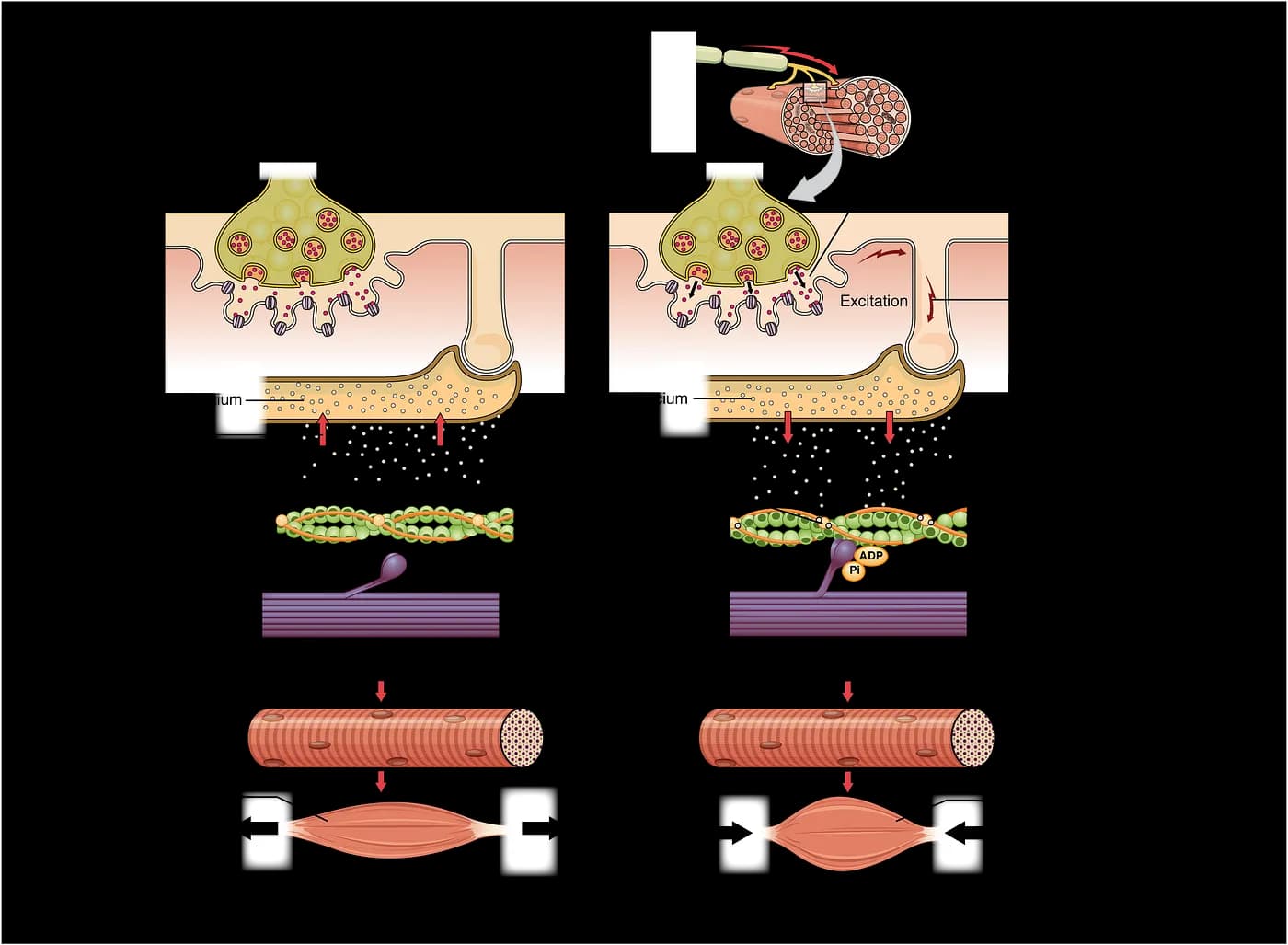 Muscle contraction and relaxation diagram
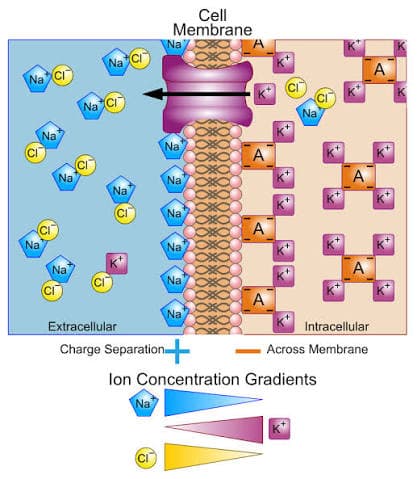
Every muscular contraction is driven by the transfer of sodium and calcium (two of the primary electrolytes — sodium, calcium, potassium, and chloride) across cells to reach a charge that can range from -45 to -15 mV (Horowicz, 1981). Until the specific charge is met, the fiber cannot contract. This is why electrolytes are (rightfully so) crowned as an incredible supplement that may not be attacked by a person residing at any spot of the spectrum of biohacker to evidence-based. The body can generally be described as a giant battery with mini charges constantly fluctuating in each cell.
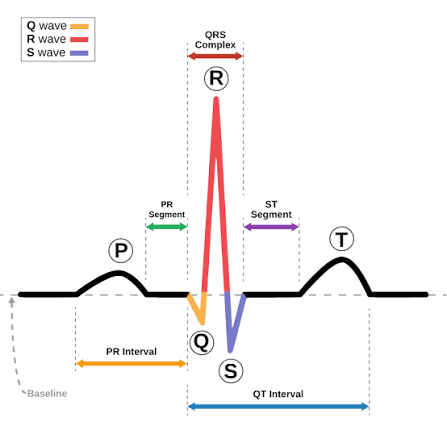 Cardiac action potential (QRS complex)
One of the simplest ways to visualize the charge of a cell is through the contraction of a heartbeat. This cycle of a heartbeat is called the QRS complex, where the heart cycles from a resting charge of roughly -90mV to ~+50mV and overcorrects to ~-110mV before returning to baseline. This is an electrical process where the heart cycles through positive and negative charges using gated ion channels to selectively allow sodium and potassium back and forth.
The resting charge of each cell will vary both intra and inter-person. So, within one individual, the average charge of cells in an injured elbow of a pitcher may be significantly higher than that of a strong hamstring. And the global mean charge of a cell in a pitcher who lives an incredibly healthy lifestyle may be lower than a pitcher with a generally unhealthy lifestyle.
No specific study that I have found directly compares the average charge of either a historically injury-prone vs a historically healthy baseball pitcher or the average charge within an athlete's historically injured body part vs a historically healthy area in their body. However, the lack of evidence proving this mechanism in practice does not prove that this mechanism is not a significant factor in the vitality of an athlete.
Adenosine triphosphate (ATP) is the currency of cells. This is the source of energy that funds everything from metabolism to throwing a baseball 100 mph. ATP has a significant negative charge, and more ATP is generated in a lower, more negatively charged environment (Zorova, 2018). Not only are more ATP generated in more negatively charged cells, but a more negative charge can be used as a proxy for mitochondrial health. Mitochondria, "the powerhouse of the cell," are the organelle in a cell that creates ATP. While there are eventual diminishing returns and not an endless supply of infinite ATP production generated by further creating a negative charge in the cells (Selim, 2025), athletes should be pushing this boundary as they continue to see benefit. The cost-benefit analysis of spending increasingly more effort for increasing less of a change for the charge in a cell means that once an athlete has crushed the fundamentals, there is a potential downside that comes from the effort required. When it gets to a point where an athlete is overconsumed about the charge of their cells, it's probably time to stop 'touching grass' (foreshadowing if you don't get it) and go do something meaningful with your life (hobbies, hang out with friends, or spend time with loved ones).
P.S. for some athletes, the direct performance-enhancing benefit of being "domed up" (overthinking and consumed by) their health and cellular charge can overcome excessive overthinking directly related to their performance. So, for someone prone to overthinking, it is better for their on-field performance to get them thinking about the minutiae of cellular health than internally cueing their pelvis in a pitching delivery.
Image placeholderTouching grass / grounding memeReplace with an owned or licensed image.
In case you feel left out of the joke, touching grass is just a meme about people being chronically online who need to go do something. Grounding is done by touching grass and helps create a lower charge in the cells.
My current opinion is that athletes should work to live a lifestyle that best aligns with the practices resulting in generating a more negative charge throughout the body, without obsessing over the minutia that creates such little impact. The added stress created from worrying about such processes is typically substantially more detrimental than the impact of the implementation. This perhaps creates a positive feedback loop within the body as the negative emotions, worry, stress, etc., can lead to the release of cortisol in the body, which is associated with inflammation, and perhaps leads to (positively charged) inflammation released within the body.
Image placeholder"We suffer more often in imagination than in reality" quoteReplace with an owned or licensed image.
If negative charges can promote tissue repair, this should be prioritized in an athlete's recovery process. One of the most significant ways to implement these changes is through water intake. It is common for athletes to drink tap water for its convenience, yet there are numerous environmental contaminants combined with the added elements that can slowly and steadily derail one's health. Within the public water supplies, there are numerous toxins such as heavy metals released into the environment, microplastics, forever chemicals, and estrogen from reproductive hormone medication (chemicals in birth control so small they cannot be effectively removed from the water supply: https://pmc.ncbi.nlm.nih.gov/articles/PMC7139484/, https://www.scientificamerican.com/article/birth-control-in-water-supply/, https://www.businessinsider.com/birth-control-pills-hormones-estrogen-drinking-water-health-effects-2019-10). Additionally, chlorine is added in tap water as a cleaning solvent along with fluoride for tooth health.
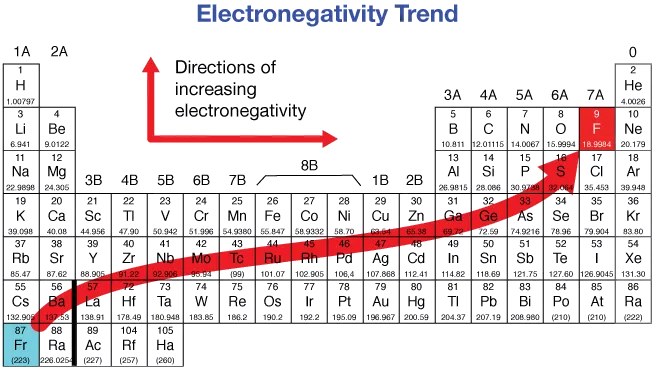
 Electronegativity trend chart
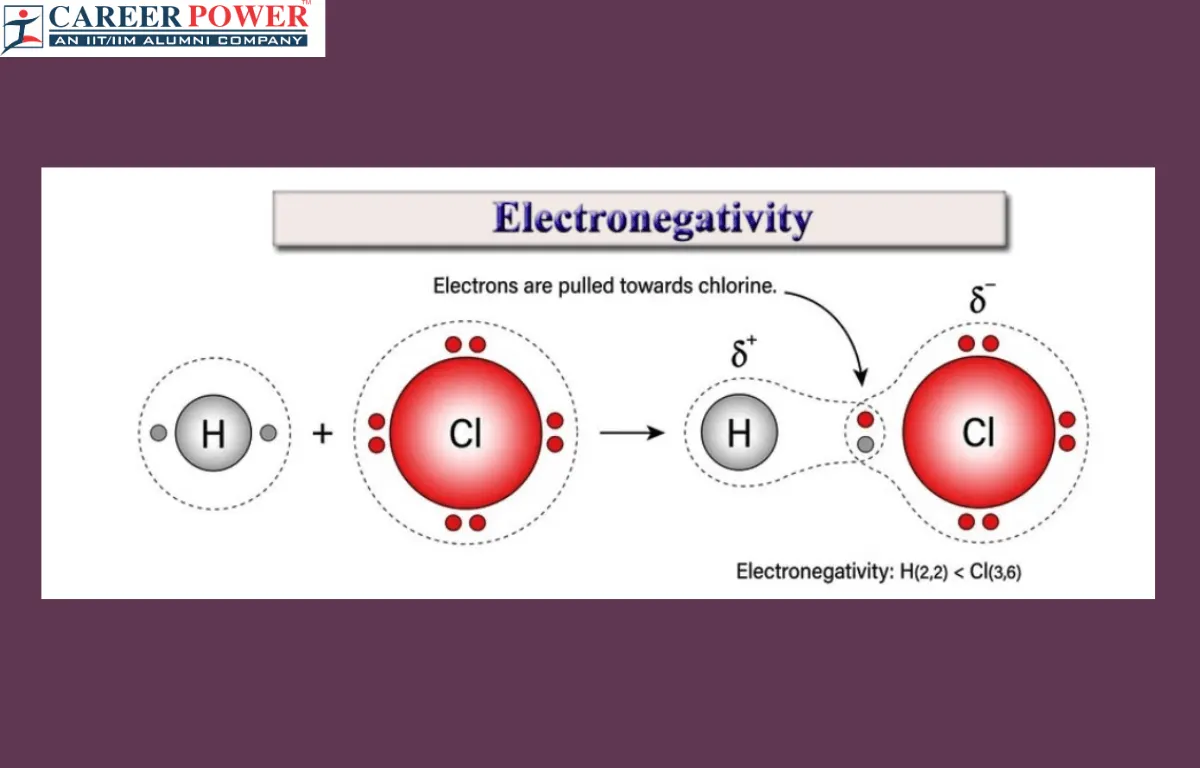
The two single most electronegative (affinity for electrons) elements are entirely unrelated, wink wink 1) fluoride (F 9) and 2) chlorine (Cl 17). Electronegativity is when certain elements have a charge that pulls in more electrons. In the example below, a hydrogen and a chlorine atom have created a covalent bond (a bond created by atoms by sharing electrons), and the electrons (negative charge) of the hydrogen are pulled into the chlorine (high electronegativity — pulling in electrons). As electrons are pulled away from the hydrogen, it becomes more positively charged.
P.S. Note how some of the most beneficial elements (potassium (K 19), sodium (Na 11), Lithium (Li 3), Hydrogen (H 1), Calcium (Ca 20), and Magnesium (Mg 12)) are generally at the lower end of electronegativity. Additionally, the absolute lowest electronegative elements (Francium discovered 1939 (Fr 87), Cesium discovered 1860 (Cs 55), Radium discovered 1898 (Ra 88)) are so rare in nature that they are not needed for any biological pathways. Biological pathways are reliant on what is available, not what is theoretical.
 Electronegativity values chart
The mass of atoms in the cells directly influences the production of ATP. Atoms that have an extra neutron (a heavy, but neutrally charged subatomic particle in the nucleus, which is the control center in the middle of an atom) will also have a higher mass and move slower. Deuterium is a naturally occurring "heavy hydrogen" that contains an extra neutron and is significantly heavier than a neutral hydrogen atom. Deuterium will naturally impair ATP synthase efficiency (the enzyme that aids in the production of ATP) due to the added mass. Multiple processes create ATP in the cells, with one being the electron transport chain (ETC), which can be optimized through the increase of free electrons.
The removal of deuterium creates deuterium-depleted water (DDW), which has been shown to prevent the development of cancer by restoring ATP production in the body (Lu, 2024). Cancer is complex, yet overly simplified to the excessive production of mutated cells, which can be influenced by damaged mitochondria.
In an effort to maximize the recovery process, electrons must be freely available in the cells to create an environment capable of generating more ATP. Cells will generate their own water, called exclusion zone water (EZ water), which differs from the water found in nature due to its uniquely low deuterium content to optimize for the efficient production of ATP. This leads to the primary factors for truly maximizing an athlete's recovery: 1) lowering cellular charge, 2) increasing the production of EZ water.
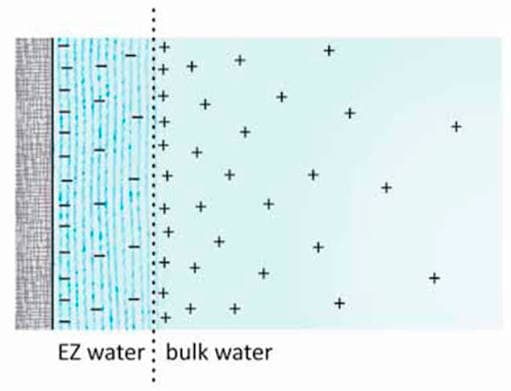 EZ water structure
EZ water is a variation of the standard H2O (common water molecule), which is labeled as H3O2, and has a more negative charge and is preferred by the body. EZ water was a groundbreaking discovery from Gerald Pollack, whose peer-reviewed work has been bashed across certain scientific circles (https://bioe.uw.edu/pollack-lab-shows-that-its-not-just-the-heart-that-pumps-blood/). Its difficulty to isolate has prevented direct claims from touting it as an undisputed fact, yet again, this contention does not directly prove inaccuracy; this difficulty to replicate is a mere reflection of the complicated nature of the work. This creates a barrier around each cell that prevents harmful toxins from entering (ie: fluoride, chlorine, deuterium, microplastics, etc). This barrier exists in healthy cells to enhance the function and provide an environment where ATP production can thrive.
 Fourth phase of water / Pollack
So what, negative charge produces more ATP, but how does it make a baseball player throw and swing faster, a basketball player jump higher, a football player run faster, or a hockey player shoot faster? ATP is the engine of all athletic performance. This is why common supplements like creatine can boost an athlete's performance on the field by increasing the stores of ATP in the muscles. But what if instead of relying on daily supplementation, we could first drastically increase our baseline ATP production through a substantially healthier and dedicated lifestyle, then get the boost from creatine on top of this? That is how lowering the charge in your cells and increasing the natural production of EZ water can transform athletic performance, recovery, and general health.
Works Cited
Horowicz, P., & Schneider, M. F. (1981). Membrane charge moved at contraction thresholds in skeletal muscle fibres. The Journal of physiology, 314, 595-633. https://doi.org/10.1113/jphysiol.1981.sp013726
Zorova, L. D., Popkov, V. A., Plotnikov, E. Y., Silachev, D. N., Pevzner, I. B., Jankauskas, S. S., Babenko, V. A., Zorov, S. D., Balakireva, A. V., Juhaszova, M., Sollott, S. J., & Zorov, D. B. (2018). Mitochondrial membrane potential. Analytical biochemistry, 552, 50-59. https://doi.org/10.1016/j.ab.2017.07.009
Ahmed Selim, N., & Wojtovich, A. P. (2025). Mitochondrial membrane potential and compartmentalized signaling: Calcium, ROS, and beyond. Redox biology, 86, 103859. https://doi.org/10.1016/j.redox.2025.103859
Lu, Y., & Chen, H. (2024). Deuterium-Depleted Water in Cancer Therapy: A Systematic Review of Clinical and Experimental Trials. Nutrients, 16(9), 1397. https://doi.org/10.3390/nu16091397